Friday, November 11, 2011

Another Journey (Passing Through Turkey)

"The silence of the snow, thought the man sitting just behind the bus-driver. If this were the beginning of a poem, he would have called what he felt inside him "the silence of the snow". P.3


Accompanied me in my travelling seat. Accompanied me in my bed while diseased. For more than 20 days, I was walking like an Arabic ant in this foreign language 436 snowy mountain of words, my dictionary was my provision. I remember that sometimes I felt bored from it, and asked it to let me free, but now that I am about to end it, I am already missing it. Snow is such a non-forgettable novel.


"He was more at peace than he ever had been before." P.312


I was feeling strange about Ka's ability to feel peace and his ability to write poems in the middle of that ridiculous coup d'état and the killing that struck out between the PKK, Islamists, Communists, Kemalists (pro-Kemal Ataturk fighters), and the military of the Turkish government, each killing the other, all are enemies to each others, while Ka is feeling at peace and is in love with Ipek and is writing a poems collection.


"Kadife will appear on the stage wearing a headscarf. Then, in defiance of the ludicrous customs that have given rise to the blood feud, she'll bare her head for all to see." P.314


Standing in that crossroad between the west and the east, standing in Turkey I imagine Orhan Pamuk trying to tell us through his novel that we, the Easterners, are:


1. Theatrical,
2. Violent,
3. Concentrating on the wrong detail of trivial things.


Putting those characteristic in an example I would say: we, the Easterners, can react theatrically violent to the degree of killing in the sake of silly trivial superficial causes. I might be wrong but that was the conclusion I found myself in.


"I don't want to turn myself into a target for the Islamists. When they see her bare her head, those students will think I'm the atheist who arranged the performance. And even if I can manage to escape to Germany, they'll track me down- I'll be walking down a street late one night and someone will shoot me." P.315


An Iraqi poet living in Tunis said after an Islamist Political Party won the elections in Tunis that: "fear from the Islamists is permissible according to the Sharia." Since last Saturday and we are in a holyday in Iraq which will continue till next Sunday. This also means that we have no journals during those days. I fell nostalgic to Algerian journals that appear in the market everyday even at Fridays. A used the internet to read some of the Algerian journals and found Dilem cartooning about Tunis election results in Liberte:

"… in a brutal country like ours, where human life is "cheap", it's stupid to destroy yourself for the sake of your beliefs. Beliefs? High ideals? Only people in rich countries can enjoy such luxuries." P. 320

Kadhim Jihad was asked one day: "if one would ask, how far is the present of Iraq, or of Arabs, from the present of this city you are living in (Paris)?"
He answered a long answer which can be summarized by that he believes in diversity and does not believe in the accumulative classification of cultures and he gave the following direct sentences: "I don't believe that the French culture is richer than the Arabic culture, at least on the aspect of fiction in literature." He admitted later that in the west there are huge advances in the analytic fields, like philosophy, humanistic specialties, or literature criticism but still, the Arabic literature according to him is not that behind.


He added that the difference is clear in the systems of living and the political dealing with each other. He added finally that in the west: "... The human is not anymore fearful about his self when he say a protesting contradictory opinion. This is the difference, it is the ability to talk and to express your ideas and to try to change without risking the life of the person, this is the essential difference, and this can be summarized in one word: democracy."
I got the last chapter unfinished. I am feeling like I am having a treasure. I will read it and try to sleep. I will dream about democracy.

Saturday, November 05, 2011

Thawra (=Revolution), now Sadr, City

Was an agricultural territory belonging to Al-Attar family (an old Baghdadi family.) There were many swamps there and many illegal houses built from simple materials that don't shelter from coldness in winter nor hotness in summer. Those illegal lodgments were belonging to those who ran away from the feudalism in the south. They prefer to be near Baghdad to work in this big city. That was when Iraq was a kingdom. At the start of the Republican era of Iraq, Abdul-Kareem Kasim had ordered to build houses in that land and to put them into the possession of its inhabitants.
"I will put an end to shanties." said Abdul-Kareem Kasim.


The ministry of municipalities, ministered by then (1959) by the first Arab female minister Dr. Nazeeha Al-Dulaimy, was the ministry which planned and execute the plan.


In 1960, the building started. The Army canal was its west boundary. It lies to the east of Baghdad and thus why Baghdadis used to name those people living in it as Shroogies (Easterners). It was belonging administratively to Al-A'athameya, and was divided into many quarters: Seville, The Kurds (majority of Kurds lived there), and Jameela (after Jameela Bou Herd the Algerian female fighter who visited Iraq and asked Abdul-Kareem Karsim who was renting a simple house for his own lodgment by then why he don't have his own lodgment so he took her to this city and told her that he will manage to have his own lodgment when those people can have theirs, and since then that particular place was named Jameela).


The name of this big city was at first, Al-Thaora (=The Revolution). It was named by Abdul-Kareem Kasim himself who was loved to a great degree and if you use your attention you will find that many of the newborns in Iraq between 1958 and 1963 were named Kareem for males and Kareema for females.


When Abdul-Salam Aarif succeeded in his coup d'état against Abdul-Kareem Kasim he changed the city name to Al-Rafidain (the two rivers, referring to Mesopotamia).
When Saddam came to the regime the city name was changed to Saddam's city.
After 2003 the city started to be named Al-Sadr city.


The city surface area is about 30 km cubic. Its population is approximately 3 million living in 144 cubic meter houses. Some of those houses were divided into two when the family enlarged (e.g. after the marriage of the elder son) to two 72 cubic meter houses. Some of the original 144 cubic meter houses lodge 3 to 4 families.


Dr. Muthaffa As'ad


Opened his private clinic at 1963 and was taking 250 Fils for a patient (A Dinar contains 1000 Fils). Dr. Muthafar specified a day in the week in which he saw patients for free. He was much loved and respected and till now the crossroad where his private clinic was is named Muthafar's Square.


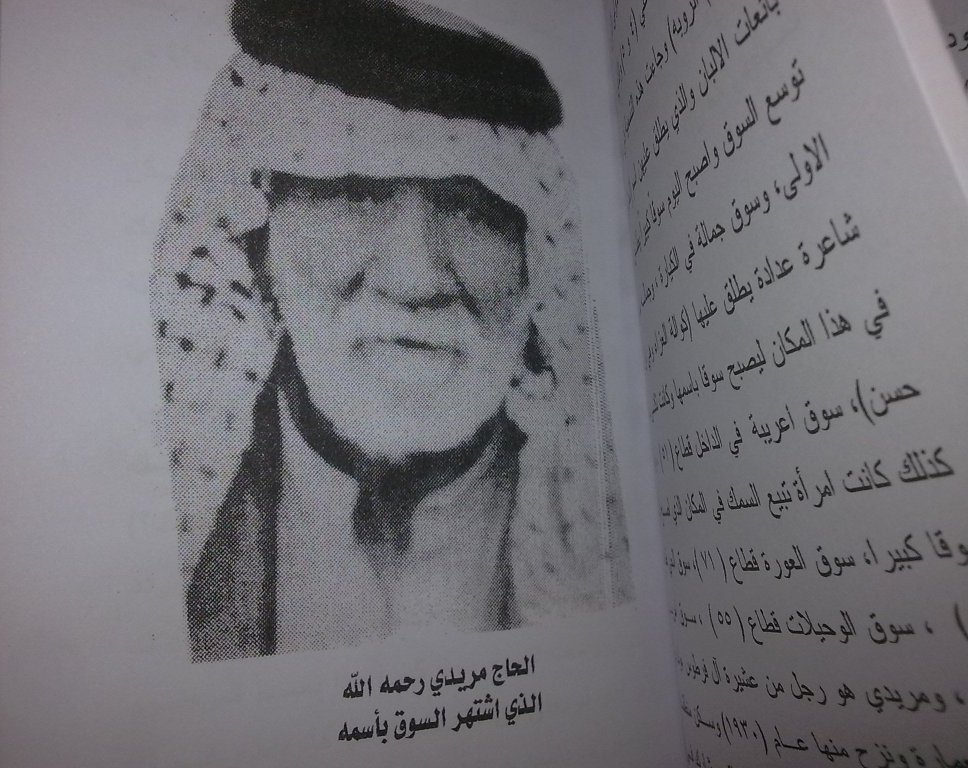
Mreadi Market


Mreadi was born at 1930 in Al-Umara. He was from Al-Fartous family. He volunterred in the Iraqi army and participated in the 1948 war in Palestine. After retiring from the army he started to sell vegetables and fruits (greengrocery) then had a kiosk selling nuts and gasious fluids.


The lovable book contains valuable information about the history of sport and art in the city too. Contains some poems written on the city. It is a book that has no reference to the publication house, with bad quality of paper and pictures, sill it has in its back cover the number of registration of the book in "Documents and Books House" in Baghdad in 2008. Much more important it contains the love to this city which is easily felt with every single line Hasan Abdul-Aba Al-Waheali wrote.

Friday, November 04, 2011

The forgetful Misconi and our heritage

Al-Mada newspaper supplements were heartily missed. From Algeria there was a non-humanized possibility of reading them PDFed. In their paper-form, non-electrified (I live most of my days without electricity using chargeable lights), smelled and humanized goes the reading of the Thursday supplement, Iraqis, from the Blazing Era, issue no. 2290 entitled: "Yusuf Misconi".

A friend of him asked him to help him marry that girl. Yusuf Misconi agreed to help. He went to talk to the girl's family about his friend intensions. He saw the girl. He forgot that he was supposed to talk about his friend's intensions. Instead, he asked for the girl's hand for himself.


From his wife, he got seven sons and a girl. From his sons there are now the doctor and the astrologist among other scientists. His house was open weekly for a cultural meeting. He was the translator of one of Dorothy McKay books about Iraqi old cities. He translated other books and wrote some like: "The Aramic and Western Melodies and Recitations in the Eastern Arabic Churchs" Published in Beirout 1965, and "Quhramanat El-Muqtadir" about that historical woman. He got some other works in history, literature and linguistics. He wrote some books with Mostafa Jawad (especially in Linguistics).


In the left, Misconi reading from a book with the cover picturing A'nistas Mari Krimli


An article by Dr. Ali Kamal (psychiatrist) about his personal memories with Misconi


Misconi pictured with Massinon, the french orientalist, when he visited Baghdad


Misconi and his family with my lighter's light


Misconi and his wife in the last page of the suppliment


Back to Al-Mutanabbee Street

For the first Friday since more than a year a visit to Al-Mutanabbe Street was feasible. The aim yas specifically to attend the meeting held in Al-Mada Library House to discuss the works Yousuf (=Josef) Ya'akoob (=Jacob) Miskouni had left us. Salim Al-Alousi was talking about his personal memories with Yosuf Yaqoub Miskouni. He told us about Miskouni's interest in Henry Field's works in Iraq and the opening of the Iraqi museum by Miss Bell.


Salim Al-Alousi lecturing in Al-Mada House about Miskouni

Other lecturers told us about Shamoon Al-Safa school in Mosul which was attended by Miskouni, a school that gave Iraq many of the pioneers in different specializations.
We were told about Miskouni being an orphan early in his life and coming to Baghdad to accomplish studies and his lifelong friendship with Mustafa Jawad and Georges Awwad, and about being a student to father A'nstas Mari Alkrmli.


Tariq Harb lecturing in Al Mada-House about Miskouni


Tariq Harb came. He told us about the love of Yosuf Ya'aqob Miskouni to his last name Miskouni which is very old in history back to the Babylonian era and means in Chaldean language: The Poor. Being a judge, Tarik Harb told us that one of the Miskouni family had taught them in the university: "The History of Law".
Taking my influenza and Snow with me I went back home.


On my way home I went to buy vegetables and fruits. Eating an orange before lunch gave me some energy to make a quick lunch. Eating another orange after lunch encouraged me to write this. I may make some coffee and then take Paracetamol and Allermine and go to sleep so early today. Visiting old Baghdad, reading few papers of Snow, knowing about Miskouni, taking Allermine after drinking a coffee, seems so relaxing. Hope I will remember my dream tomorrow morning when I wake up.


Dora, Dona Maar, La mer Méditerranée

I have entered Iraq exactly before 20 days. No single day I was free. Cleaning lodgment and winter clothes, dealing with water and electricity shortage, travelling back and forth to Karbala to arrange my new job application's papers, and going to that "poop" department for the sake of my family who still abroad since years.

My "TO DO" list also contained some pleasure activities classified as duties: visiting a family member or a friend, or reading a novel.

Yesterday, I came back from Karbala after giving that "Competence Lecture" that I must succeed at to continue my application for the new job. It was about Conversion Disorder and especially about the development of the concept with references to Anna O, and the case of Dora. Before the lecture was to start I was advised by a friend who loves and respects me to not use my surname when introducing myself and to use instead my tripartite name (my name followed by the name of my father followed by the name of my paternal grandfather). I felt estranged but thankful to my friend for reminding me of that. The second thing that shocked me was when I ended my lecture, a long beard professor asked me in a tone that I felt as if blaming: "Do you read Koran?"

I answered "Yes!" He said: "Read some". From the waiting that followed I knew that I was supposed to read some. So I said just to be sure: "Now? Here?" I got the sense that that question was entitled to me especially. But when he pointed to a nearby Koran and said: "Open that Koran and chose from it". The idea of the presence of a Koran in the lecturer's table told me that that question was entitled to all who came to pass this test. I said to myself that they might want to hear how I can spell Arabic letters, or if I have an extremist view against Koran, and our culture. So I was about to pick the Koran when somebody said: "Just read us something from your memory". Another man said: "Yes please just chose a verse from your memory and read it to us". I put the Koran back and started reading that verse that says there is only one God, and he was not born, nor will give birth to anybody.

I went back home. Turned off my mobile phone and had a dinner. At 8 P.M. I went to bed and fall into deep long sleep. I woke up before two hours (8 A.M.). I have influenza. The skies are gray. I am thinking about my mom. Next to my pillow lies "Snow", and my hand writing of a part of it from page 269:
"I'm remembering how we were standing at the window one winter night, looking out at the snow, and she ran her hands through my hair."


I headed to the kitchen and found that I have no more coffee. I headed to the hall and found Dona Maar beautiful face. They say that this face is supposed to be sad. I don't find it sad at all. I went after some sneezing to clear my nose. I felt so relaxed and at home. I went back to Dona Maar. I thought of my mom. She got a beautiful face like a fruit, a pomegranate or a pear or both. I wondered whether I was dreaming about my mom, or about the Mediterranean sea. My eyes keep relaxing on contemplating Dona Maar.


I will rip my TO DO list that says that I must have a bath, wash clothes, clean lodgment, and so on. After writing this I will still have the ability to head to Al-Mutanabbee street.


Monday, October 31, 2011

Nose Compass

Ka was investigated by Kadife, the sister of the woman he is foolishly in love with. She drew a pistol and asked him to take off his clothes, piece by piece, and she searched his clothes with her "delicate hands". She was searching for microphones and wires. Her apologies followed. Then it was time to take Ka to meet Blue. Blue hides in a secret place, so their trip to Blue secret lodgment would be highly secretive. I was reading that on my way to arrange some papers in a governmental department in central Baghdad. I was already searched for holding an explosive belt in the entrance to the bus station. As we have learned since 2003 we would stop crucified in front of the guards who usually pass their hands fast on the contour of your body and concentrating on the back of our body, for it seems that the explosive belt can be caught from sensing that sight. On the first days after 2003 war I was feeling so estranged in front of such searching and I used to feel tickled by their hands. I'd even raised some suspicions when, few times, since years, I took a step back when the guard was about just to start the body search. The tickling didn't continue since I grew fatter and less sensitive.

I was body searched again, with the same mechanism, at the gate of the governmental department. When I entered that department that I had visited for the last time about 2 years ago, I was glad to see that it was renewed, with now many new benches and seats for the waiting citizens, many fans for the ventilation, and the more white walls. I went to the same window that I used to find my dossier in, and find it less crowded than ever. I was glad. Since I was talking to the clerk I started to feel strange. The clerk, a young slim girl who must be in her 20s and was non-veiled and reasonably made-up, told me to wait few seconds. While waiting I wondered why do I feel strange and caught the detail that that strange feeling was due to smelling a strange strong scent. My nose compass led me to the source after about a half minute of dizziness. The smell comes just next to my right feet. Poop. Yay. In the spot.


In today's Al-Mada newspaper there was a short story written by Nazar Abdul-Sattar. It was entitled: "He Loves that Odour". It fixed my day complexion. It started with that cleaner leaving her job in a non-specified governmental department. As usual, she must be body searched before leaving to prevent her stealing things from the department. The police woman who used to body search her hates her and that is said frankly in their daily conversation. The police woman hates that cleaner and always reminds her that she is found often sleeping with other male cleaners. And reminds her often of how many times she was found to smuggle tea-bags in her bra. The police woman is irritated also by that man, who used to wait the cleaner in the gate of the department, a man, who is neither husband nor relative. Today the police woman was about to search the cleaner's bra when a black bag caught her attention. The cleaner was so shy to reveal what was in there. The police woman said triumphed: "A panty!". The police woman started interrogating our poor cleaner asking whether she is now going outside wearing no panty. She even tried to pass her hands under our poor cleaner's skirt. The cleaner was about to cry when finally revealed that that man who used to wait for her is her lover and that they did it yesterday on phone and he asked her to give her panty as a souvenir, because he likes its odour. Our cleaner added that she is now wearing another clean panty.
The short story's narration is clever and perfect. I would understand its core idea as the privacy invasion in our eastern society where the concept of personal space is not maturely developed. The cleaner's innocence and weakness is so evident and sad. She is especially weak in front of the police. She doesn't know her rights. The writer's insight is trust worthy enough that I will read anything he will write in the future. His name need to be remembered: Nazar Abdul-Sattar. Nazar Abdul-Sattar's boldness reminded me of psychological books, and I don't know really why (how much I wish the story is translated to English so that you can read it). The dialogue between the two women is a kind of dialogue that we, men, don't hear. Since our society is highly sexually divided with many walls and taboos between the two sexes, I wondered how it was difficult for a male writer, from Iraq, to write such a dialogue and wondered how fictional vs. realistic it was.
Fictional it was or realistic, I found my daily life more vivid and complex than my days in the last year in Algeria. I am back to Iraq where I can think easily and can find things that provoke thinking and writing in me. I have even started again to cook and to enhance my cooking abilities. Broccoli soup was delicious today. It is September and I buy pomegranates daily. I don't know what is in common between the pomegranate smell and the smell of coffee, but I can be sure that I like to eat pomegranate slowly when I wake up from my long siesta (in Baghdad I regained that habit of sleeping more than an hour at noon because of the noisy streets in the morning) while coffee is being prepared and their aromas (pomegranate and coffee) mixes.


What about Snow? As you remember Ka had to meet Blue. He must not be seen heading to his secret lodgment. A horse-drawn carriage came. Ka was told to hide under the canmvas that is usually used to cover the goods the carriage delivers. He didn't know that he would lie next to Kadife:


"Without a word, he lay down next to Kadife among the empty propane canisters.
The journey, which he knew at once he would never forget, lasted only eight minutes, but to Ka it seemed much longer. As he wondered where in the city they were, he listened to the people of Kars commenting on the creaking carriage moving past them, and he listened to Kadife's steady breathing as she lay quietly next to him. A gang of boys caught the tail of the carriage and were pulled along with them for a while. He liked the sweet smile Kadife gave him; it made him as happy as those boys."
P.230


Sunday, October 30, 2011

Paranoid Pyramid

Yesterday a friend invited me to a night tour in Baghdad and to spend some minutes in a new café that you will be served by females. In Baghdad, cafés are still a man zone. Since ages, no female is allowed in Baghdad to sit in a café. So, being in a café that some of the workers are females seems enough privileged to pay it a visit at night and drink a cappuccino even if the price would hit nearly 4 US dollars a cup. My friend told me about a new DVD series that gaining fame in Baghdad, named "The Arrivals". The series is a documentary about how every disaster that occurred to us is programmed by some evil willed secret persons. One of the detail of this long series is about 9 September, and how it was programmed by those devil worshipers who they supposed to give this message: God's number is 10, so when we reach 9 we jump to 11, and you got to call 119, to ask to be rescued, but not form God.

I thought of what is left for the poor paranoid schizophrenics to believe in, and how large is the "culturally accepted" ideas that I must know so that I don't jump to diagnose a delusion, in the near future, hoping that I may go back to work.

The weather was great at night in Baghdad, and I went to sleep refreshed after that delicious cappuccino. I woke up the next morning and took Orhan Pamuk's Snow and headed to regulate some of my father's retirement papers. In the almost exactly two hours journey (the same time that took me before days to reach Karbala) I read about that granny sherbet conspiracy theory in Kars. Before two years, a couple of Turkish Army soldiers had strange symptoms that were diagnosed in Kars hospital as cases of food poisoning. Investigations revealed that they all drank that day from that granny sherbet café. For the past two years, and the secret agents of the Turkish Security were following that granny café, and following the drinkers of the sherbet for some time to see whether they were poisoned or not, so that, if some were poisoned selectively, another investigation might start on the goals of the deliberate poisoning of the sherbet. One had noted that all those who were poisoned were Turkish, not Kurdish but this note wasn't taken seriously for the simple cause that the Kurds and Turks are very alike to a degree that the granny would fail to discriminate between them and selectively poison the Turks deliberately.


After I went out the retirement ugly building, and set off to Al Mutanabbee street, I bought Al-Mada journal. Searched for "Studies on Hysteria" by Freud and Breuer for about 2 hours in vain, I ended standing near the Turkish Restaurant in Al Tahrir Sequare. Took the bus back home, held the journal, and red Ali Abdul-Ameer Ijam's column. He wrote about the political history of Iraq from 1948 till now and its very striking character of being always frightened form "conspiracies" of "enemies". The column was entitled: "Iraq Fascinated by Conspiracies". He gave many examples and ended saying "Iraq is not fascinated with life".


I reached home, ate the pomegranate my mom had advised me to eat to help curing my diarrhea, ate coffee and wondered how much it goes well coffee after pomegranate. I even thought about putting some few drops of pomegranate juice to the coffee. I re-held the novel and the journal. I re-read and contemplate. At last, I have this silence again inside me, as if snowflakes are falling slowly and calmly from my skies to improve whiteness and silence.


Friday, October 28, 2011

İstiklâl Caddesi


Rootless Origins

Sprinkled are my origins, as I prefer to imagine, and scattered aromatically among the pine tree spiny leafs. Somewhere in Bou Saada, somewhere in every lost civilization. In every Diaspora, in every minority, sprankled are my origins, for the love of the poor, and the white hearted.


"The last [bullet] struck two meters over the projection booth, hitting the face of the clock, which, having stopped working sixty years earlier, was now covered with dust and cobwebs." P 161

I read those lines from the novel and put my head back on the pillow. As the electricity power was lost, and I shut my eyes, I remembered him with his yellow umbrella.


When I marched so fast on that moving forward ground I reached Aksaray so fast in that rainy black night in Aksaray-Istanbul. I threw my heavy bag in Uzbek hotel. Took a quick tasteless snatch of a sandwich. Sat next to rain when he approached. An elderly in 80s. or might be in 90s. or even more. He got many lost teeth as evident from his giggle.His yellow childish umbrella is so specific. And he used to say things like:


The Mediterranean didn't contain me,
Nor did the Red,
In the Atlas I got a wrecked ship,
In Uzbek a bed.


My Danube joins the Caspian to the Black,
I'm Armenian in Diaspora,


My duduk is my identity.


I'm the Kurd, the Chaldean, the Amazeigh,
The Assyrian out of Nineveh.
The Yezidi, the Mandaean,
I am the rootless origin.


I had walked after Saint Augustin
From Thagast but didn't reach Rome,
I've ended in Efes,
Making a soup out of mushroom.


I remember how he used to come and disappear. He still remember how estranged I was with his line "I am the rootless origin". I remembered Amin Maalouf book "Origins" in which he said that he prefer the term "Origins" to the term "Roots" cause we are not tress. We are not fixed, unmovable. I remembered also Shakir L'Aibi poems collection entitled "Roots and Wings", a collection that I didn't read it per se, but read an interview with the poet about it, about roots, wings, and travels. I decided that I need to travel so a lot. I went to sleep that night and woke the next morning to find the old man waiting for me in a café. He was nodding his head as if saying: yes, you need to travel a lot dear. Speechless, he offered me a sea food dish. The seagulls were quaking above our heads. White we are, snow our novel is, frightened our scary hiding dreams, yet in the day, we find some peace to meet and exchange some silent ideas.